Our Farming practice
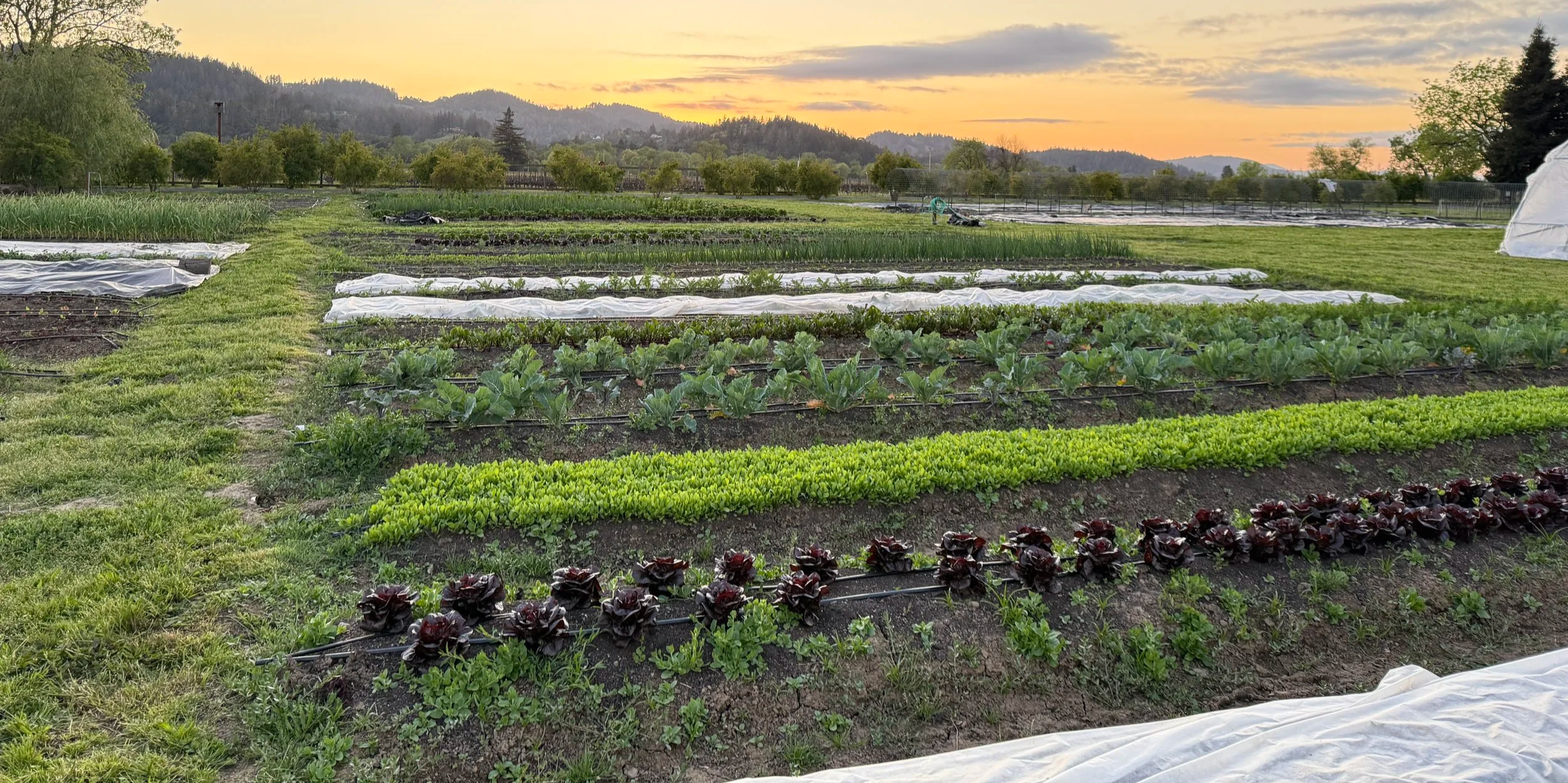
Noble Goat Farm is an intensive, no-till, no-spray diversified vegetable and fruit farm. Our farming practices are what set us apart from other local growers.
What is No-Till Farming?
No-till is a method of farming focused on growing food without disturbing the soil through plowing and turning. We use permanent beds, and aside from the initial opening of a new field, we do not till these beds. Instead, we engage in human-scale methods to manage our fields. Avoiding disruption of the natural structure of our soil and leaving plant roots in the ground provides habitat for invertebrates and microorganisms,enhances nutrient cycling, reduces compaction, and increases the soil’s water-holding capacity.
We farm by hand. All cultivation, planting, and harvesting are done by the hands of the farmers. We do not rely on fossil fuel-burning machinery to manage our fields, but instead we believe there is an essential part of engagement and observation that comes from hands in the soil and feet on the ground.
REGENERATIVE & INTENSIVE GROWING MODELs
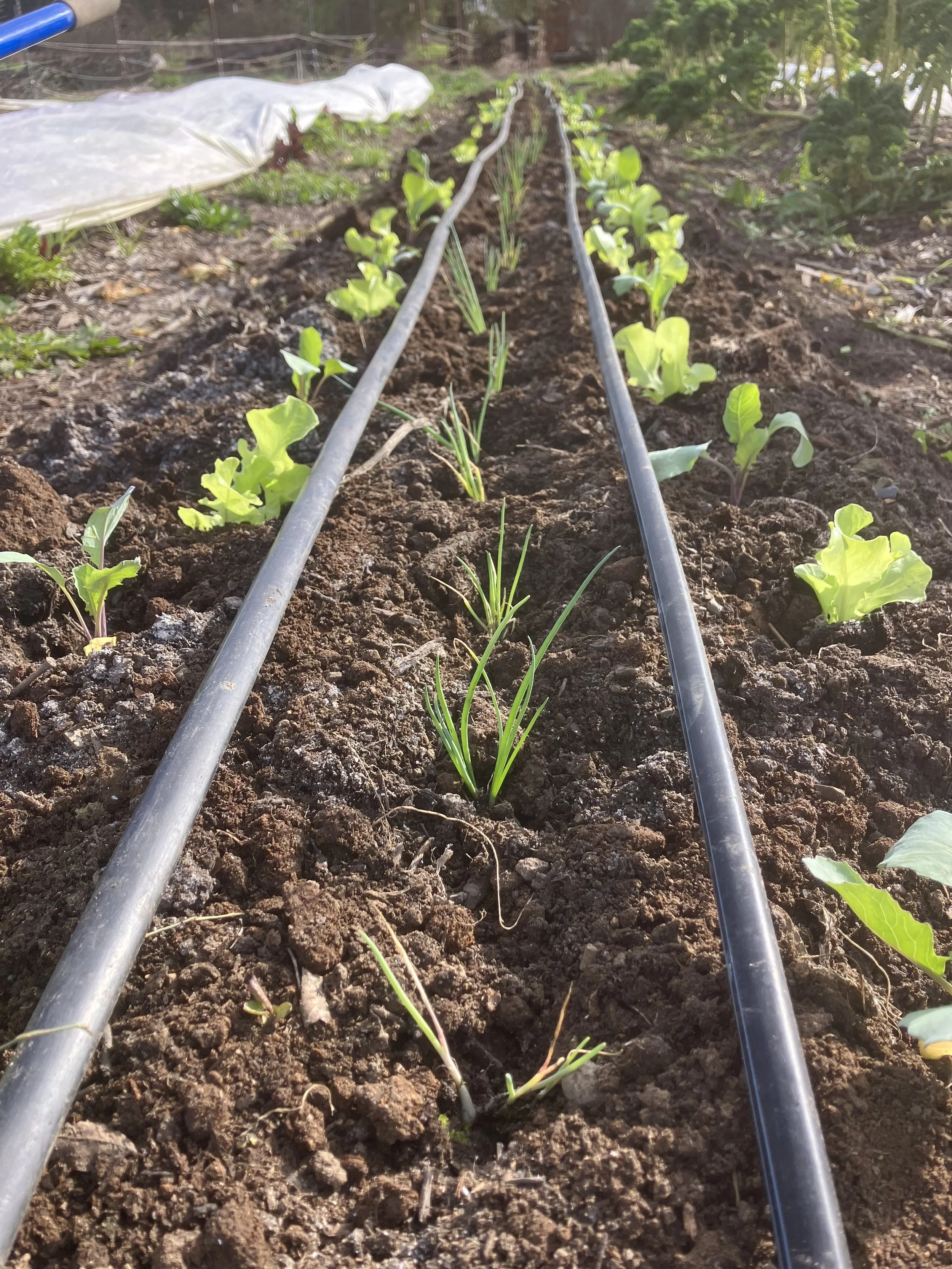
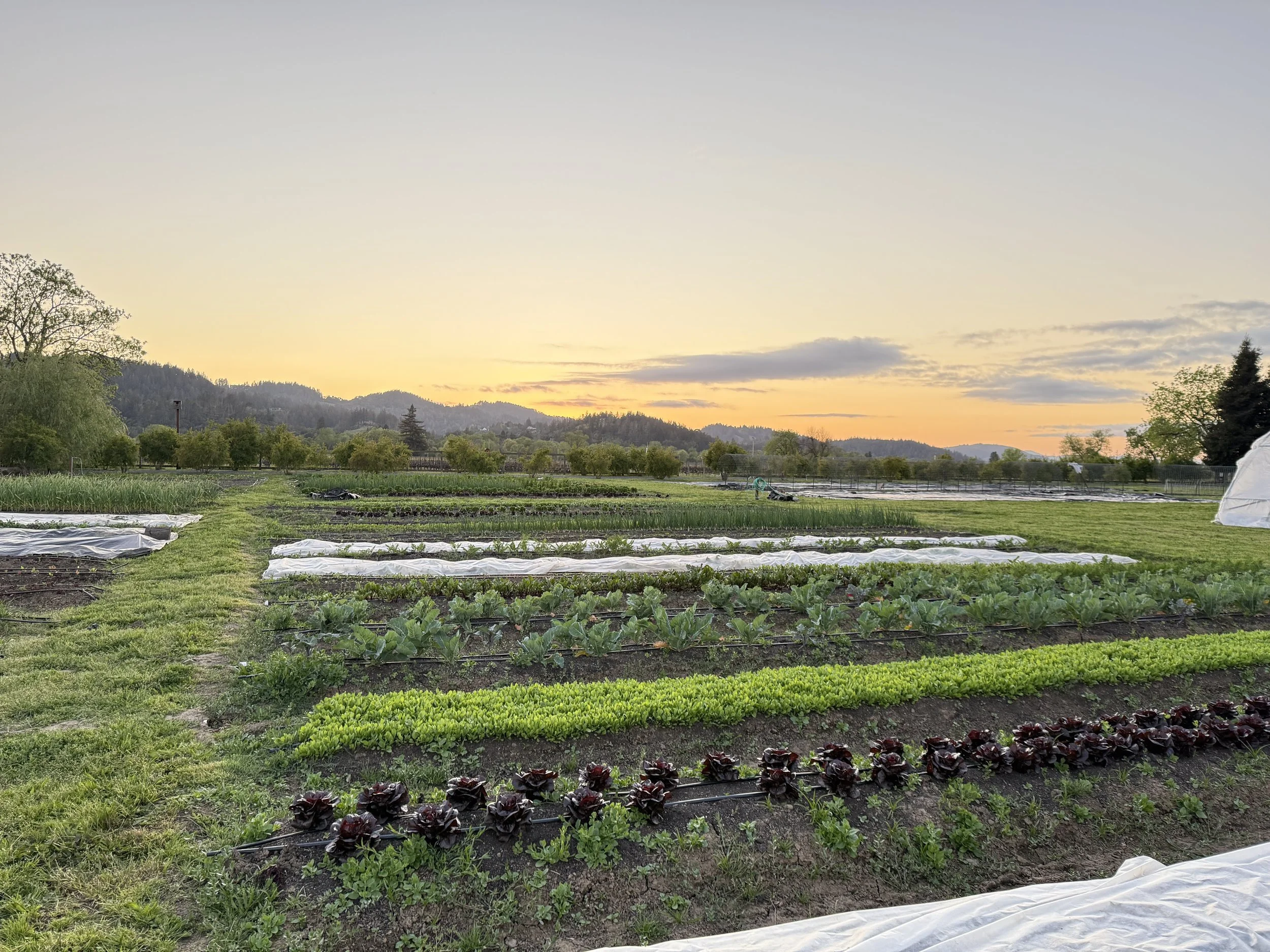
We practice intensive planting and growing techniques. We want living, photosynthesizing plants in the ground year-round. A single bed on the farm might be “flipped,” or replanted between three and six times a year. When beds are planted, we use interplanting methods to keep exposed soil to a minimum. This means in one bed you may have lettuce, cauliflower, and scallions. Interplanting increases productivity while benefiting soil health. In our mild Northern California winter, we cover crop up to 60% of the farm, ensuring that no field is left bare in the off-season. Cover cropping introduces new plant species to increase biodiversity and help control erosion and weed pressure, while conserving moisture and nutrients.
We do not spray any pesticides or fungicides on our produce and orchard. Although there are a number of sprays approved as organic, we believe that chemicals have no place in our food systems and bodies.
WHAT WE GROW
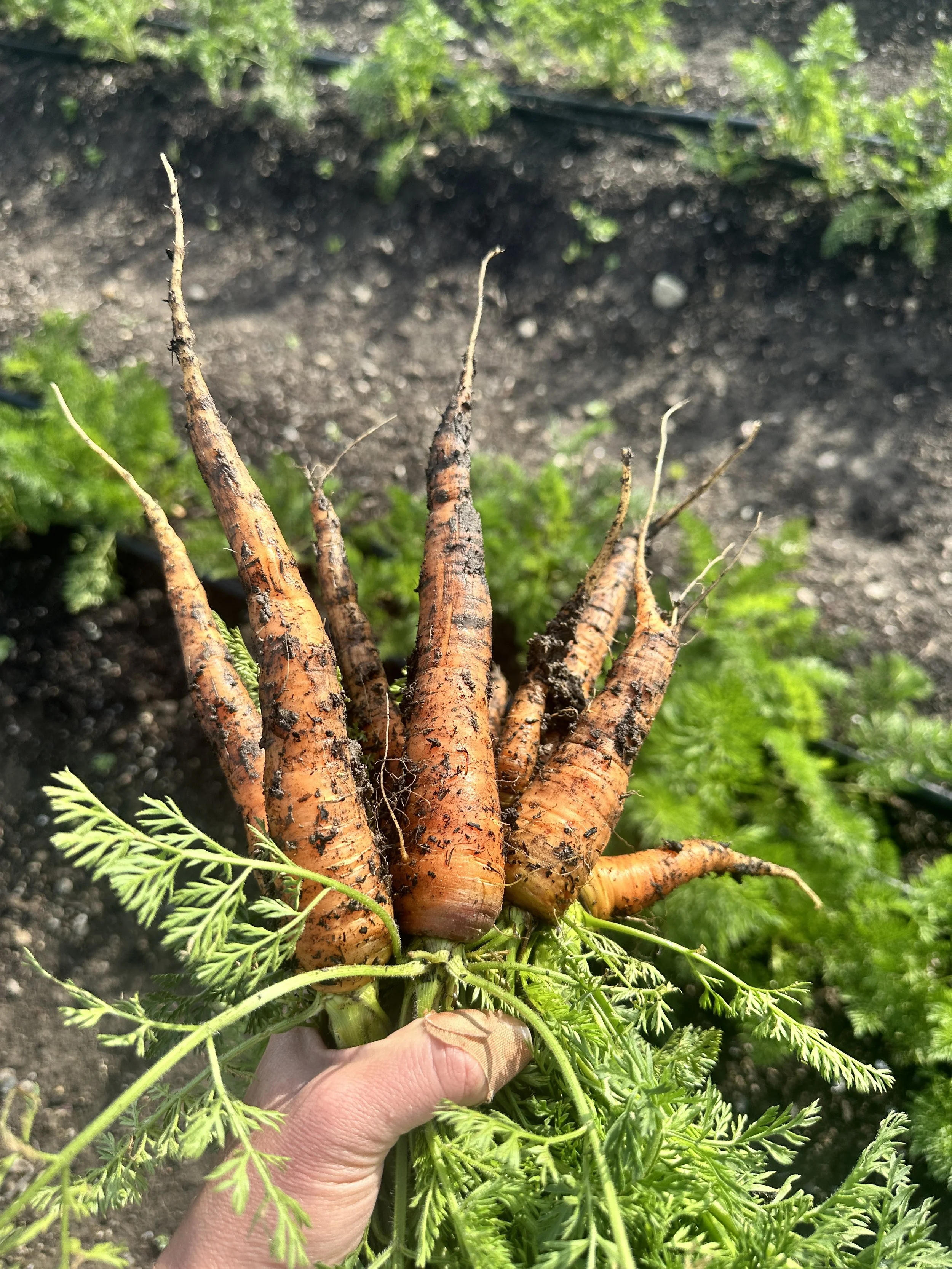
Growing in an intensive, regenerative model is beneficial for everyone because it means we have the highest level of diversity of crops for our customers, farms, animals, and land. We have many crops that we rely on for consistent sales and farm productivity; little gem lettuce, toscano kale, rainbow chard, beets, carrots, cauliflower, and broccoli, to name only a few. We also grow seasonal favorites such as zucchini, melon, tomatoes, strawberries, peppers, and winter squash.
Farming on a small scale with so much diversity allows room to trial new crops throughout the year. We grow what we like to eat! Some new varieties for 2026 include celery, potatoes, pumpkin, parsnips, and new types of sweet and hot peppers! We can’t wait to see how they do.
Where we farm
Our farm sits at the base of Dry Creek Valley in Healdsburg. Warm days arrive carried inland from the coast, while cool evenings settle quickly as marine air drifts through the valley, creating wide temperature swings that slow plants down just enough to build flavor and resilience. Morning fog lingers in the shoulder seasons and long, dry summers allow crops to mature steadily without the pressure of humidity. Our water table is high, allowing for some crops like our pomegranates and tomatoes to be dry-farmed.
The soils tell an equally important story. Formed by centuries of creek movement and hillside erosion, the clay soils reward careful stewardship but resist shortcuts. By nurturing with organic matter and minimal disturbance, they develop structure and life, supporting deep roots and diverse plantings. Our climate and soil-building techniques allow us to grow an unusually wide range of crops in close proximity.